
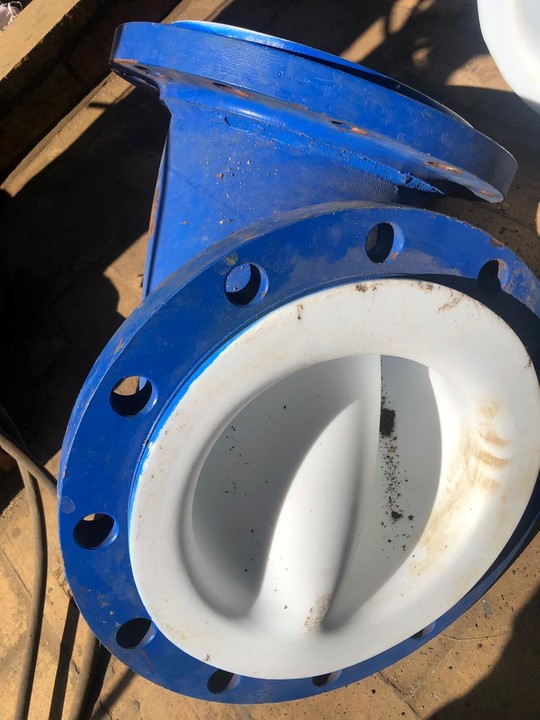
- PTFE liner bulged / sucked inside pipe during vacuum in operating condition
- PTFE flaring cracked from flange edges
- PFA lining cracked and lining failed completely
- PFA lining chip off from base metal in PFA Lined fittings / valves in few days of operation
- Leakage from flange joint due to poor quality of welding
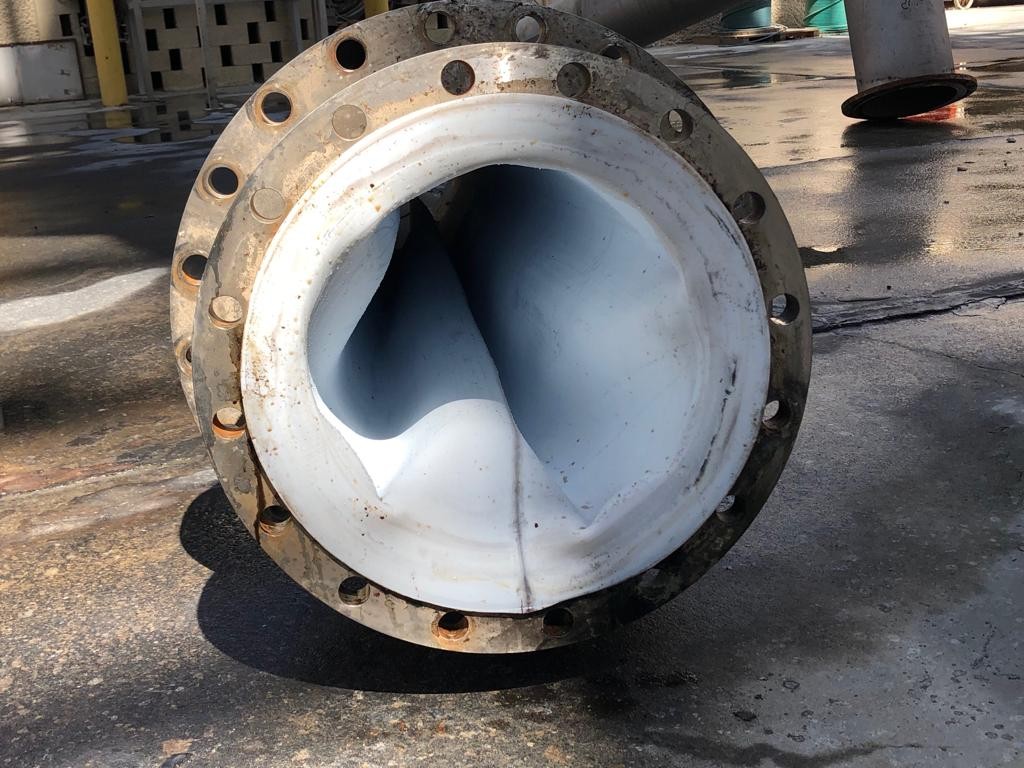
PTFE liner bulged / sucked inside pipe during vacuum in operation
During design and manufacturing of PTFE lined piping, if lining thickness is less or actual operating parameters not considered while deciding lining thickness, there are chances that in vacuum condition, PTFE liner got sucked / bulged during operation. In case of higher temperature with high vacuum, lining gets fail immediately. Same conditions occur in PFA lining or FEP lining or PVDF lining.
PTFE liner manufacturing process has also important role in life of liners and performance, there are paste extrusion and Ram extrusion process for liner manufacturing.
Many companies believe that Paste extrusion liners are better in vacuum and in lining quality since permeability is lesser in paste extruded liners.
PTFE flaring cracked from flange edges
Flaring process with PTFE and other plastics are different depend on material melting temperature, flaring process in tube is done through various process but most common is heating end connections through controlled air and then change shape through dies and tools. Sometimes it is also heated by direct blow of gas flame which also gives enough heating but it's not controlled heating, so quality of flaring and life of end connection depend on quality work. In flaring it's always thickness of end portion reduces with bending or curve portion, if that curvature is not properly made then there are chances of crack after flange to flange pressure and after some time of use. More pressure shortens life of flare joint with weak quality.
In case of PFA / FEP, if compression moulding was not done with proper heating and material flow then there is chances of failure of flare joint.
PFA lining cracked and lining failed completely
PFA or FEP lining must be done with proper selection of melt flow and quality of fluoropolymers. Base metal design and provision of grooves inside body also makes lining stronger. In case of air bubble during lining or no grooving inside body creates failure of lining. Less thickness of lining and non-suitability of material with process can also fail lined parts.
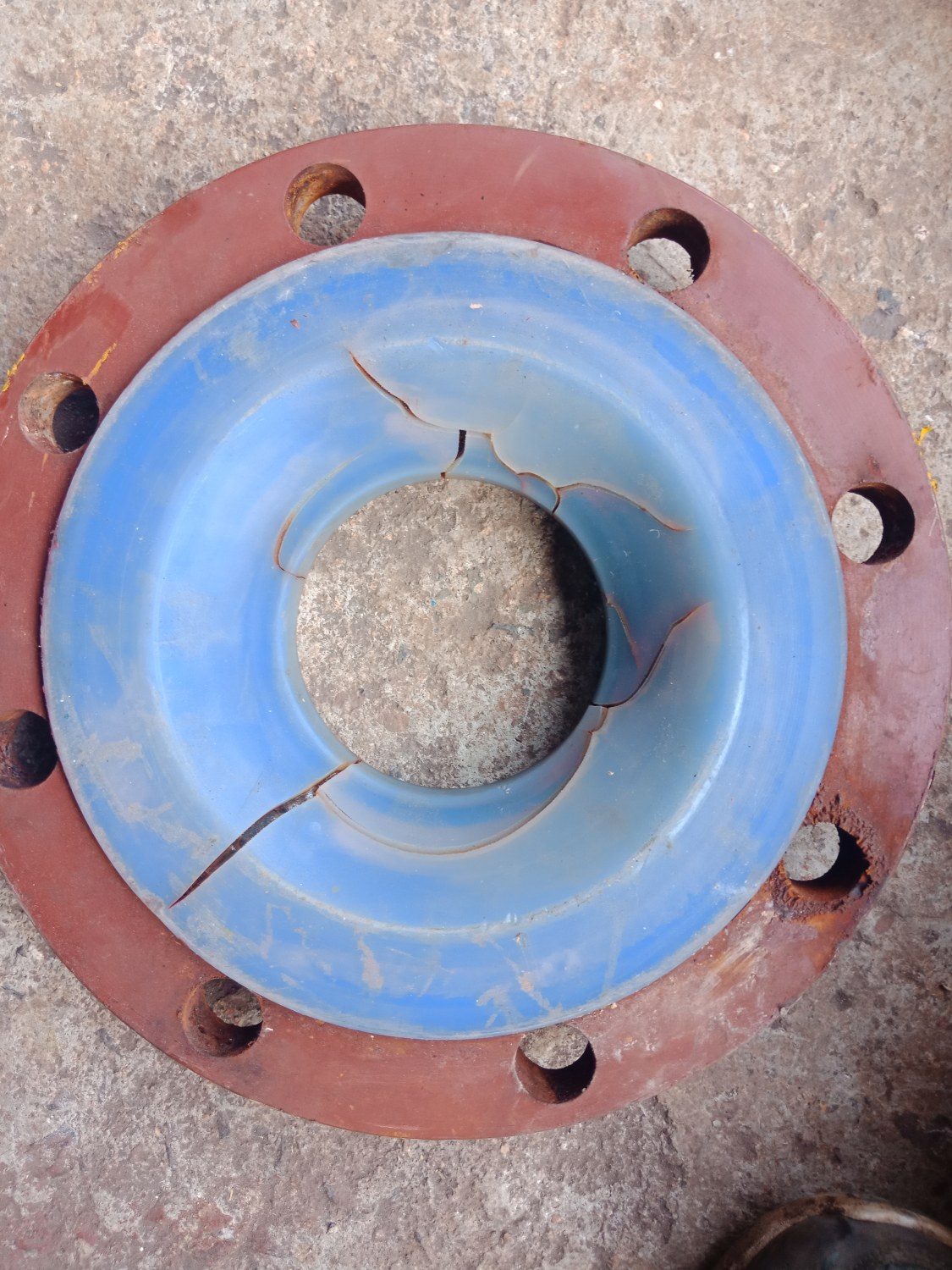
PFA lining chip off from base metal in PFA Lined fittings / valves in few days of operation
Whether lining is done through compression moulding or transfer moulding, it's always necessary to have proper flow of material inside die cavity and then proper cooling before die opening, in case of pressure of higher work load and continuous production, skipping step like preheating of dies before moulding creates low quality of lining and eventually lining get failed after some use of valves or fittings, since material would not flow on wall and different temperature at wall and inside die will have unequal flow and less bonding. PFA lined valves and PFA lined fittings specially with large sizes and large diameter have these problems.
Leakage from flange joint due to poor quality of welding
Lining always depends on base metal quality whether its fabricated or cast, in piping and fittings when flanges relate to pressure, in case of poor welding, leakage starts from weld joint and pin holes. If process is on high pressure, then there are more changes of contamination due to media and metal contact through pin hole or welding failure, it's always better to have pressure test and spark test. Good welding joint makes life of piping longer and reliable.
There are many other factors of failures which should be considered during manufacturing and in application for lined pipes, fittings and valves.