Equipment failure causes losses of billions of dollars in the pharma and chemical industry.
The effects of failure include production loss, accidents, fire and environmental damage.
Piping failure can be internal leakage, external leakage, a failed lining, or failure of the metal piping itself.
Reasons for failure include a defective pump or reactor, process malfunction, chemical reaction, and a sudden rise in temperature or pressure. Human error, valve failure, sensor defects and maintenance errors also cause failures.
Detecting lining failure: early detection of lining failure is possible through the vent holes provided in pipes and fittings. With early detection, the batch or material under process can often be saved from mixing with corrosion products or from spilling on the floor.
During inspection, the first step is to stop the process or plant so the failed lined pipes or fittings can be replaced. Inspect all nearby connected lined pipes and fittings as well. If the failure was caused by the pump or another external source, other piping may also be damaged and need replacement.
Once the lined product is removed, first check which process fluid was used and how hazardous it is for human contact, or whether it can release harmful gas. After confirming it is safe to handle, clean the surface for inspection where possible.
In some failures, high pressure or high vacuum changes the shape of the lining. During cleaning and inspection, keep the part in this condition if further evaluation may be required. Preserving it helps the engineer understand the cause of failure.
During inspection, record the operating parameters exactly, along with the process fluids and their properties.
If the failure is in a weld or in the metal portion, the weld quality may have been poor. It is also possible that the highly corrosive fluid weakened the weld joint after the lining failed, and then damaged the metal part.
Where possible, photograph the failure before uninstalling and again after removal from the piping.
Common types of lined pipe and fitting failure
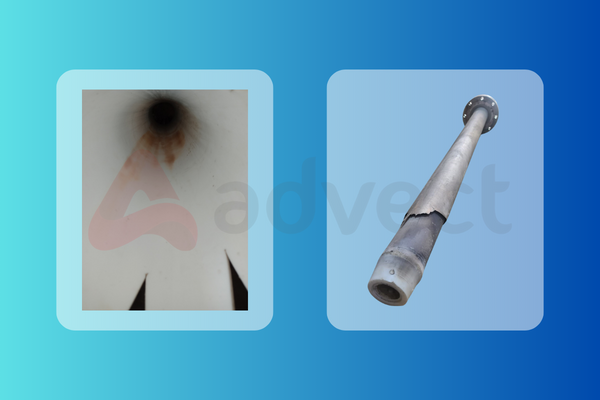
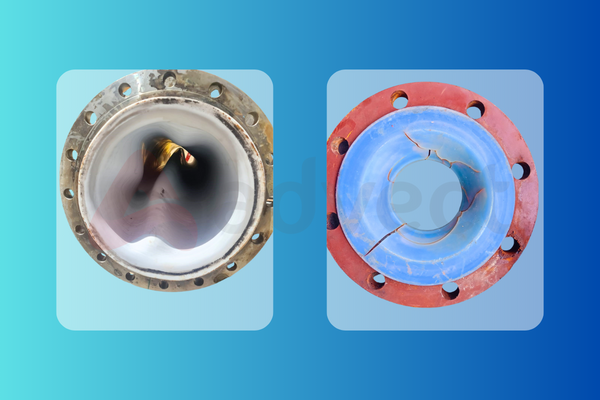
- Cracked flaring of the PTFE tube on the flange area
- Bulging of PTFE tubes due to vacuum
- Pin hole in the lining
- Cracked tubes of lined pipes
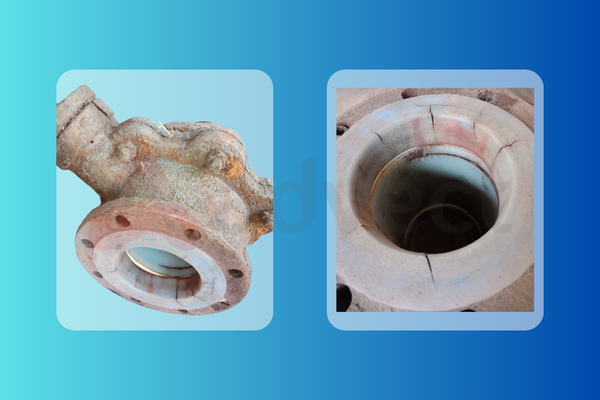
- Cracked lined surface of PFA/FEP lining
- The metal joint cracked from welding
- Cast part failure in lined tee, lined cross or lined reducer
- Gasket failure in the joint
- Shrink lining inside metal
- Lining lifted from the metal surface
- Pieces of PTFE fiber inside the pipe
- Pieces of lined material inside the process
- Burned material of lining
- Shrinkage of the lining
- Cracked from drilling area of flange
- Lined valve failure
- Leakage due to loose bolting
- Leakage due to failure of the PTFE bellow / PTFE expansion joint
- Spillage due to a cracked lined bend